How to Pick Pollinator Trees for Wildlife Apple Orchards

Last Updated: November 4, 2026
Quick Summary
Choosing the best pollinator trees for wildlife apple orchards starts with bloom timing, so plant a midseason apple beside a midseason partner to get fruit set. Crabapples are commonly used as pollinizers for apple trees, and many bloom over a long period and hold fruit into winter for birds and deer.
- Mismatched bloom windows give you flowers, bees, and nothing else.
- Crabapples often bloom over a long period and hold fruit into winter.
- Honey Crisp drops August into September as an early-season draw.
- Wolf River covers September into October as an early to midseason staple.
- Enterprise holds fruit into December as a late-season hold.
Table of Contents
- Matching Apple Tree Pollination Partners by Bloom Time
- Crabapple Trees for Pollinating Apple Trees and Feeding Wildlife
- Best Apple Trees for Deer and a Longer Drop Window
- Frequently Asked Questions
Matching Apple Tree Pollination Partners by Bloom Time
Choosing the best pollinator trees for wildlife apple orchards starts with bloom timing, and the right pollinator trees make all the difference. Penn State Extension guide to fruit tree pollination
Plant a midseason apple beside a midseason partner and you get fruit set. Mismatch the bloom windows and you get flowers, bees, and nothing else.
Browse apple varieties to match bloom times for pollination.
Crabapple Trees for Pollinating Apple Trees and Feeding Wildlife
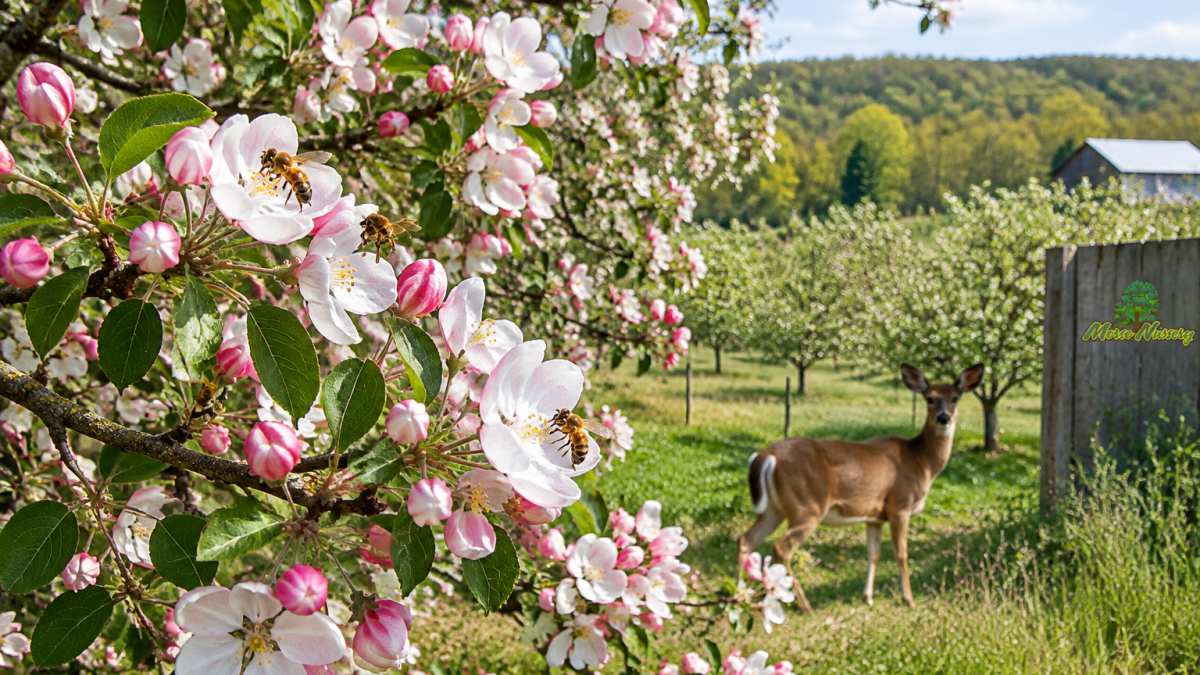
Crabapples are commonly used as pollinizers for apple trees. Many bloom over a long period and hold fruit into winter for birds and deer.
Shop crabapple varieties for pollination and wildlife.
Best Apple Trees for Deer and a Longer Drop Window
Staggered drop times spread the fruit drop across the season. Gala drops August into September. Morse Wildlife Apple covers September into October. Golden Delicious and Winesap follow in October and November, and Jona Free holds fruit into December. Extending this seasonal bounty further requires a diverse understory, which is why creating wildflower meadows provides the essential nectar sources needed to sustain pollinators once the final apples have fallen.
| Variety | Drop Window | Role in the Orchard |
|---|---|---|
| Honey Crisp | August - Early September | Early-season draw |
| Wolf River | September to early October | Early to midseason staple |
| Liberty | October to early November | Mid to late fall |
| Enterprise | November to early December | Late-season hold |
| Nova Scotia Crab | October-November | Reliable Pollinator for Late Season apples |
Shop the All Season Apple Bundle for staggered drop times, and read seven oaks that feed deer fast to build a fuller habitat plan.
Frequently Asked Questions
Which apple tree variety is the best pollinator?
There is no single best pollinator. The right choice is any variety that blooms at the same time as your main tree and is a different cultivar. Crabapples are strong options because they produce heavy pollen and bloom over a long window. For a wildlife orchard, plant at least two apple varieties plus a crabapple so bloom overlap is covered even in a cold spring. Morse Nursery's Morse Wildlife Apple, for example, needs a second apple variety nearby for cross-pollination.
Can crabapple trees pollinate apple trees?
Yes. Crabapples are in the same genus as eating apples, so their pollen is compatible, and many crabapples bloom over a long period that overlaps with early and mid-season apple varieties. Plant them within about 50 feet of the trees you want pollinated, and make sure they are a different cultivar. As a bonus, crabapples hold small fruit that birds and deer use through winter, so they earn their space in a wildlife planting.
Do wildlife apple orchards need more than one apple variety?
Yes. Most apple trees are not self-fruitful, so a single variety often sets little or no fruit. Plant at least two different cultivars with matching bloom times, and add a crabapple for insurance. A mix also spreads fruit drop across the season: Gala drops August to September, Morse Wildlife Apple September to October, and Fuji holds into late October through December, giving deer a food source across the fall season.
Your orchard only feeds deer as long as something is dropping. We build ours around bloom overlap first, then stretch the drop window from August to December. Morse Nursery ships genetically selected, air-pruned trees nationwide, backs them with a one-year guarantee when you add a Survival Kit, and offers free planting consultations to plan the layout. Get started with Morse Nursery and turn your property into a food source that lasts all season.