How to Choose Self-Fertile Pear Trees for Deer Plots

Last Updated: October 28, 2026
Quick Summary
Self-fertile pear trees set fruit from their own pollen, so one tree can produce a crop without a second variety nearby. Kieffer is a dependable self-pollinating choice that holds fruit late into fall, while Baldwin is only partially self-fertile and does better with a compatible partner.
- Check each variety's pollination note before buying to see whether one tree is enough.
- Kieffer holds its fruit late into the fall and is self-pollinating.
- Baldwin drops fruit from mid-September to October and yields rise with a nearby partner.
- Space pear trees about 15 to 20 feet apart to allow airflow and reduce disease pressure.
- Use a tree tube to protect young trees from deer browse.
Table of Contents
- What Self-Fertile Means for Pear Trees in a Deer Plot
- Why Pear Trees Earn Their Place in a Deer Plot
- Best Pear Trees for Deer Plots
- Pear Tree Pollination Requirements, Explained
- Spacing and Care for Pear Trees in a Deer Plot
- Planting Your First Self-Fertile Pear Trees This Season
- Frequently Asked Questions
Deer hunters and rural landowners keep asking the same question: which pear trees will produce fruit without a second tree nearby? Morse Nursery has over 40 years of forestry and wildlife habitat expertise. This guide shows you how to pick self-fertile pear trees for deer plots, and which varieties we recommend. Establishing a reliable food source ensures that your orchard remains a focal point for wildlife throughout the long, cold hours of tree stand hunting.
What Self-Fertile Means for Pear Trees in a Deer Plot
A self-fertile pear tree can set fruit from its own pollen, so you don't need a second variety to get a crop.
Self-fertility is not the same as guaranteed yield. Some self-fertile varieties still produce more fruit when a compatible pollinator grows nearby.
Self-fertile versus pollinator-dependent varieties
Pollinator-dependent varieties need pollen from a different, compatible pear to set fruit.
- Self-fertile: One tree can produce fruit on its own.
- Pollinator-dependent: Needs a second compatible variety within bloom range.
- Partially self-fertile: Produces on its own, but yields rise with a partner.
Check each variety's pollination note before you buy. It tells you whether one tree will do, or whether you need two.
Why Pear Trees Earn Their Place in a Deer Plot
Pear trees offer fruit that drops at different points in the season.
A few reasons pear trees may suit a deer plot:
- Fruit drop timing varies by variety.
- Trees fit in a plot without taking over the whole area.
- Varieties differ in drop timing.
See our guide on Best Trees for Deer Food Plots: 5 Proven Options to Build Your Plot Around for how pears fit among other options.
Best Pear Trees for Deer Plots
We recommend a few pear varieties for deer plots.
Kieffer: late drop that holds deer into November
The Kieffer pear is a dependable, self-pollinating variety. It holds its fruit late into the fall. You can buy the Kieffer Pear Tree directly from us. Plant it in full sun with well-drained soil.

Baldwin and Seckel: mid-season options with pollination partners
Baldwin drops fruit from mid-September to October. The Baldwin is partially self-fertile; harvests increase and stabilize when a compatible variety grows nearby. The Seckel is small and sweet, and its listing describes it as suitable for wildlife and home orchards.
Consider the Baldwin Pear Tree. For a sweet option, look at the Seckel Pear Tree.


The article names three pear varieties for deer plots, each with a different drop timing and pollination need.
| Variety | Drop timing | Pollination |
|---|---|---|
| Kieffer | Holds fruit late into fall | Self-pollinating |
| Baldwin | Mid-September to October | Partially self-fertile |
| Seckel | Not stated | Not stated |
Pear Tree Pollination Requirements, Explained
Pollination needs are one factor to consider when choosing trees. Here's what to check:
- Self-fertile varieties can be planted alone for a basic crop.
- Partially self-fertile varieties produce on their own but do better with a partner.
- Pollinator-dependent varieties need a compatible second tree to set fruit.
For a plot where you want both mid-season and late drop, consider a Baldwin alongside a Kieffer.
Spacing and Care for Pear Trees in a Deer Plot
Give each tree room to grow. Most pears do well spaced about 15 to 20 feet apart, which allows airflow and reduces disease pressure.
Keep these care steps in mind:
- Plant in full sun for the best fruit production.
- Water regularly during the first year, especially in dry spells.
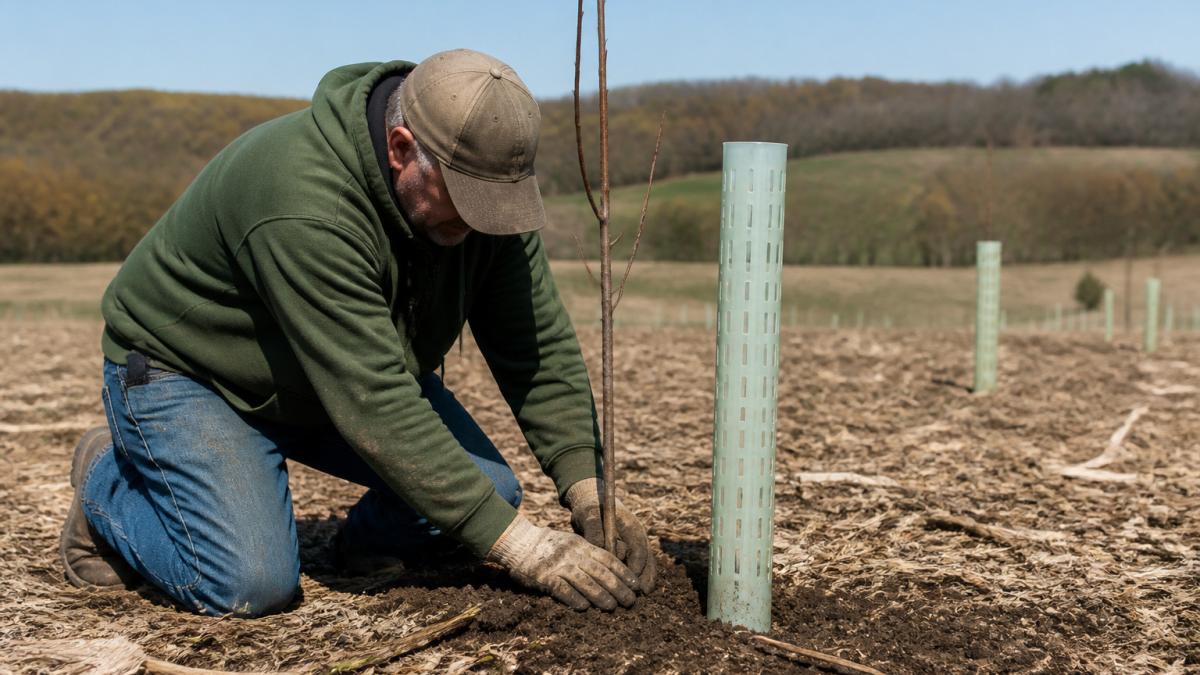
- Use a tree tube to protect young trees from deer browse.
- Prune once a year to keep the shape open and fruit-bearing.
Planting Your First Self-Fertile Pear Trees This Season
- Choose a sunny spot with well-drained soil.
- Dig a hole wide enough for the roots to spread out.
- Set the tree at the same depth it grew in the nursery.
- Backfill, water in well, and add a tree tube.
- Check soil moisture through the first growing season.
If you're not sure which varieties suit your plot, browse the full pear tree collection and compare options. Our team can also help you build a planting plan for your land.
Frequently Asked Questions
Are pear trees self-fertile?
Some are. Kieffer, Seckel, and Baldwin pear trees can set fruit on their own, though Baldwin harvests increase and stabilize when a compatible variety grows nearby. Check each listing's pollination note before you plant.
Will deer eat pears from a pear tree?
The Kieffer listing describes its late-season fruit drop as an attractive food source for whitetails and other wildlife. It gives a fruit-drop period from late October to early December.
How far apart should pear trees be planted?
The Seckel listing recommends spacing trees 15 to 20 feet apart. The Kieffer and Seckel listings give a height of 15 to 25 feet and a spread of 12 to 20 feet. Plant in full sun.
How long does it take a pear tree to produce fruit?
The Seckel listing describes its grafted option as faster fruiting than its seedling option. Timing varies by variety and growing conditions.