Do Deer Eat Dolgo Crabapples? What Landowners Should Know

Last Updated: November 2, 2026
Quick Summary
Deer eat dolgo crabapple fruit once it ripens and drops, and they also browse the twigs and leaves. The heaviest fruit drop usually happens in October, when deer use of the tree climbs and hunters often see the strongest daytime activity around it.
- Dolgo flowers in April to May, and a late frost during bloom can wipe out most of the crop.
- Plant more than one variety, or confirm your Dolgo has a partner tree within bee range for pollination.
- Put a physical barrier around the trunk, since a buck can wreck a sapling in one night.
- Plant in small clusters near cover, not in the open middle of a field.
- Crabapples carry the early-to-mid season, while persimmons and acorns carry the late season.
Table of Contents
- Do Deer Eat Crabapples? What Dolgo Trees Offer Whitetails
- When Do Dolgo Crabapples Ripen?
- Dolgo Crabapple Tree Planting and Care for Deer Plots
- Crabapples vs. Persimmons, Acorns, and Other Deer Foods
- How to Use Dolgo Crabapples to Attract Deer to Your Hunting Property
- Ordering Dolgo Crabapple Trees for Your Property
- Frequently Asked Questions
Do Deer Eat Crabapples? What Dolgo Trees Offer Whitetails
Yes, deer eat crabapples, and the Dolgo crabapple tree deer attraction story is one of the most reliable in wildlife planting. If you want to go deeper on choosing the right crabapple variety for deer before committing to Dolgo, that guide covers disease resistance and deer preference.
Here is the short version: Dolgo is a cold-hardy crabapple that produces heavy crops of small fruit. Deer eat the fruit, and they also browse the twigs and leaves.
Below, we break down what Dolgo offers whitetails, when the fruit ripens, how to plant and protect it, and how it stacks up against persimmons and acorns. Keep reading, because the timing of the drop matters more than most hunters realize.
Why Deer Target Fruit Trees During Hunting Season
Deer are browsers and opportunists. They follow the most dependable calories they can find, and a fruiting tree is a fixed address. Unlike a food plot that gets mowed or frost-killed, a mature crabapple keeps offering fruit on a schedule the deer learn.
A common mistake is assuming deer only want the fruit. They also eat the leaves, twigs, and buds. That makes a crabapple a multi-season draw, not a one-week wonder.
How Long Dolgo Crabapples Stay on the Tree
Fruit persistence is the trait that separates a useful crabapple from a novelty.
When Do Dolgo Crabapples Ripen?
Watch the fruit color. As crabapples turn from green to red, deer start paying attention. Once they soften and drop, the tree becomes a magnet.
A Month-by-Month Guide to Dolgo Fruit and Deer Use
Most published descriptions of Dolgo are general, so treat the timeline below as a practical pattern rather than a guarantee. The sequence is consistent across most of the tree's range, but the exact weeks shift with your climate zone, spring warmth, and summer rainfall.
- April to May: Bloom. Dolgo flowers in mid-season for a crabapple, which helps it pollinate with many other apples and crabs. Bees do the work. A late frost during bloom can wipe out most of the crop for that year.
- June to July: Fruit set and sizing. Small green crabapples develop. This is when drought stress does the most damage to final fruit size and crop load. Water young trees during dry spells.
- August: Color break begins. Fruit starts turning from green toward red. Deer may sample dropped or damaged fruit, but the tree is not yet a primary draw.
- September: Ripening accelerates. Fruit softens and sugars rise. Early drops begin, and deer start checking the tree regularly. This is often the first month the tree visibly changes deer movement.
- October: Peak drop in many areas. The heaviest fruit fall usually happens here, and deer use climbs accordingly. Hunters often see the strongest daytime activity around the tree in this window.
- November: Persistence phase. Some fruit remains on the tree while much has dropped. Deer continue to clean up ground fruit and browse twigs. In mild climates, fruit can hang into this month.
- December and later: Late hold. In many areas a portion of the fruit lingers, and deer return to the tree when other foods are gone. Persistence varies by tree and weather; hard freezes and strong winds knock fruit down faster.
What Is Documented vs. What Is Anecdotal
A common pattern is that a Dolgo in a year with a heavy crop draws more deer than the same tree in an off year. That is why serious habitat managers plant several trees and several varieties rather than relying on one.
Dolgo Crabapple Tree Planting and Care for Deer Plots
Planting a Dolgo crabapple tree is straightforward if you get the basics right. Choose the site, give it a pollinator, plant it correctly, and protect it while it establishes. Do those four things and the tree does the rest.
Site Selection and Pollination
Most crabapples need a compatible pollinator nearby to set good fruit. Plant more than one variety, or confirm your Dolgo has a partner tree within bee range. Pollinators and bees do the rest.
- Full sun, six or more hours daily
- Well-drained soil, avoid low wet spots
- Room to reach mature size
- A second crabapple or apple nearby for pollination
Step-by-Step Planting
- Time the planting. Bare-root trees go in while dormant, in early spring before bud break or in late fall after leaf drop. Container trees can go in during the growing season if you water them consistently.
- Clear a planting area. Remove competing grass and weeds in a circle several feet across. Competition for water is one of the most common reasons young trees stall.
- Dig the hole. Make the hole about twice as wide as the root spread and no deeper than the root system. In heavy clay, rough up the sides so roots can push out.
- Set the tree at the right depth. The root flare, where the trunk widens into the roots, should sit at or slightly above grade. Planting too deep is a slow killer.
- Backfill and settle. Use the soil you removed, firm it gently, and water thoroughly to settle air pockets. Do not mound soil against the trunk.
- Water through establishment. Water deeply at planting, then keep the soil moist but not saturated through the first growing season. Deep, infrequent watering beats light daily sprinkling.
- Prune lightly at planting. Remove only broken or crossing branches. Heavy pruning at planting sets the tree back.
Spacing and Time to Bearing
Space Dolgo trees so they have room for their mature canopy, and cluster several trees near cover rather than scattering singles. A common pattern is to plant in small groups with enough room between trees for airflow and sunlight. Most crabapples begin bearing a light crop within a few years of planting and increase production as they mature, but the exact timing depends on rootstock, site, and care. Do not expect a heavy crop in the first season or two. Once these trees reach full production, the dense canopy and heavy fruit drop create an ideal environment for stalking with bows during the autumn harvest.
Protecting Young Trees From Browse and Bark Damage
This is the part most guides skip, and it is where new plantings fail. A young tree is candy to deer, rabbits, and even bucks rubbing velvet. Without protection, a buck can wreck a sapling in one night.
The fix is simple: put a physical barrier around the trunk. Our 60" tree tubes can help protect the trunk from wind, deer browse, and rub. A tree survival kit purchase also activates the one-year tree guarantee.


Watch out: skipping protection on a young crabapple is the single fastest way to lose it. Deer find new plantings fast.
Ongoing Care
- Water: Keep young trees watered through dry spells for the first few seasons.
- Weed and mulch: Maintain the mulch ring or weed mat to keep grass and weeds back from the trunk.
- Prune: Do structural pruning in late winter while the tree is dormant, removing dead, damaged, and crossing branches.
- Watch for pests and disease: Crabapples can be affected by common apple problems, so inspect the tree during the growing season and act early.
- Check guards: Inspect tree tubes and guards each season and adjust them as the trunk grows so they do not girdle the tree.
A well-planted, well-protected Dolgo will outproduce a neglected one by a wide margin, and the deer will find it either way.
Crabapples vs. Persimmons, Acorns, and Other Deer Foods
No single tree feeds deer all year, so smart landowners plant a mix. Crabapples, persimmons, and oaks each shine at different times. Stacking them gives deer a reason to stay on your ground.
| Food Source | Peak Timing | Strength | Weakness |
|---|---|---|---|
| Dolgo crabapple | Fall | Fruit holds late, multi-season browse | Needs a pollinator |
| Persimmon | Fall & Winter | Sweet fruit deer love | Ripens later |
| Acorns | Fall into winter | Heavy calories, wide coverage | Big mast years vary |
| Food plot greens | Fall and winter | Fast to establish | Frost and grazing wipe it out |
Persimmons are a strong companion. If you want to go deeper on varieties, our persimmon tree varieties review compares the best options for deer. The takeaway: crabapples carry the early-to-mid season, persimmons and acorns carry the late season.
How to Use Dolgo Crabapples to Attract Deer to Your Hunting Property
Placement decides whether a crabapple helps you or just feeds deer at night. Put trees where deer already travel, then set your stand with the wind and approach in mind. A tree in the wrong spot is a food source you never see.
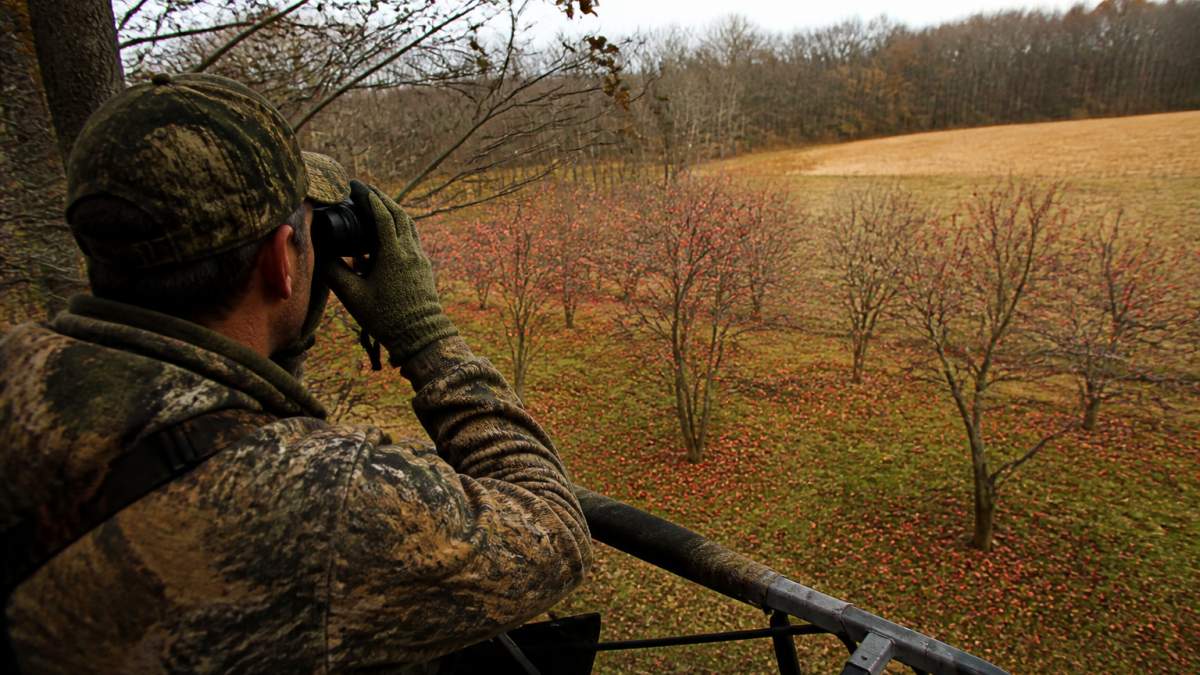
Plant in small clusters near cover, not in the open middle of a field. Deer feel safe eating close to escape cover. Set your stand downwind of the fruit and leave a quiet entry route.
- Cluster several trees rather than one lonely tree
- Keep plantings within easy reach of thick cover
- Hunt the downwind side of the fruit
- Add trees over time to extend the drop
To see how Dolgo fits a larger plan, our guide to the best trees for deer food plots shows how to build the whole plot around proven producers.
Ordering Dolgo Crabapple Trees for Your Property
The best time to plant a deer tree was years ago. The second best is this season. Dolgo crabapples give you reliable fruit, late persistence, and browse value in one package.
Morse Nursery offers genetically selected, air-pruned trees and free nursery consultations for planting plans. Our experts have helped over 1,000 customers design custom habitat plans. Our Tree Survival Kit with one-year tree guarantee is available with qualifying purchases.
Frequently Asked Questions
Do deer eat Dolgo crabapples?
Yes. Dolgo crabapples are a genuine deer food source, and whitetails eat both the fruit and, in some cases, the twigs of young trees. How heavily deer use a Dolgo planting depends on what else is available nearby, so it works best as part of a mix of food sources rather than as the only tree on the property.
When do Dolgo crabapples ripen, and how long do they stay on the tree?
Dolgo crabapples typically ripen in late summer into early fall, well ahead of the rut in most areas. The fruit often hangs on the tree past peak ripeness and drops gradually over several weeks, which stretches the window when deer can feed on it. Fruit persistence varies with weather and wildlife pressure, so treat the drop as a range rather than a fixed date.
How long does it take a Dolgo crabapple tree to produce fruit?
Crabapples generally fruit earlier than standard apples, and Dolgo is known for starting production at a relatively young age. Expect the first meaningful crop within a few years of planting, with yields building as the tree matures. Genetically selected, well-rooted nursery stock and good early care shorten that timeline compared with seedling trees.
How can you protect a young crabapple tree from deer?
Young trees are the most vulnerable, because deer browse new growth and can rub bark during the season. Morse Nursery's 60" tree tubes can help protect the trunk from wind, deer browse, and rub. The Tree Survival Kit includes a 5-foot grow tube, drought-protection weed mat, Nutra Pro fertilizer pack, and bird net, and it activates a one-year tree guarantee.