What Are the Best Chestnut Trees for Deer?

Last Updated: November 2, 2026
Quick Summary
The best chestnut trees for deer are early, mid, and late dropping varieties planted together, because chestnut trees for deer feed a herd only a few weeks each. Choose varieties by your hardiness zone, soil drainage, and hunting window rather than one winner.
- Chestnuts generally carry lower tannin levels than acorns, making them sweeter and more palatable to deer.
- Chestnuts complement existing oaks rather than replace them, filling gaps in your mast system.
- Morse Nursery collects seed from proven mother trees with desirable production traits.
- Chestnut trees from Morse Nursery stock typically begin producing nuts within 3 to 5 years.
- Plant at least 3 compatible chestnuts, preferably 6 to 10, spaced 20 to 30 feet apart.
Table of Contents
- Quick Comparison: Eight Chestnut Trees for Deer
- Why Chestnuts Belong in a Deer Habitat Plan
- Chestnuts vs Acorns for Deer: What the Difference Means for Your Property
- Chestnut Tree Nut Drop Times: Building a Season-Long Food Calendar
- The Eight Varieties: Which Chestnut Tree Fits Your Land and Season?
- When Do Chestnut Trees Produce Nuts, and What Selective Breeding Changes
- Planting, Soil, and Site Selection for Chestnut Trees for Deer
- Frequently Asked Questions
Quick Comparison: Eight Chestnut Trees for Deer
The best chestnut trees for deer are not one tree but a set of varieties chosen to spread nut drop across the entire hunting season. Grouping chestnut varieties by drop window lets landowners build a food calendar instead of relying on a single moment of abundance.
Variety |
Nut Drop Window |
Hardiness |
Typical Mature Height |
Best Role |
|---|---|---|---|---|
August Drop American Hybrid |
August to early September |
Zones 4-8 |
45-60 ft |
Early-season pattern setting |
September Drop American Hybrid |
Mid-September to early October |
Zones 4-8 |
40-60 ft |
Archery-season draw |
Morse Hybrid |
September to October |
Zones 4-9 |
30-60 ft |
Multi-species attraction |
Gobbler |
September to October |
Zones 4-9 |
30-45 ft |
Turkey and deer overlap |
Chinese Chestnut |
September to October |
Zones 4-8 |
30-50 ft |
Dual-purpose nut production |
October Drop American Hybrid |
October to early November |
Zones 4-8 |
50-60 ft |
Rut timing |
November Drop American Hybrid |
Mid-November to early December |
Zones 4-8 |
50-60 ft |
Late-season holding power |
Layeroka |
Mid-season |
Cold hardy to Zone 4a |
Varies |
Cold-climate reliability |
No single row wins. The right chestnut trees for deer depend on your climate, your soil, and the weeks you actually hunt.
Why Chestnuts Belong in a Deer Habitat Plan
Chestnuts earn their place because they produce a hard mast crop that deer seek out, and the drop timing can be planned around.
Here is the part most habitat plans miss: variety selection is a scheduling decision. A property with one chestnut variety feeds deer for a few weeks.
That is the core of how we approach chestnut trees for deer at Morse Nursery. Dependable chestnut crops can support a steady food source for deer, while understanding wild venison benefits helps put the value of healthy wildlife habitat in perspective.
Chestnuts vs Acorns for Deer: What the Difference Means for Your Property
Chestnuts generally carry lower tannin levels than acorns, which makes them sweeter and more palatable to deer. Acorns vary widely in tannin content by species. Chestnuts are also carbohydrate-rich nuts.
That does not make chestnuts a replacement for oaks. Treat them as a complement.
Oaks are the backbone of most hardwood mast systems, and their drop timing varies by species and region. Chestnuts fill gaps.
A practical comparison:
- Tannins: Chestnuts are generally lower, so deer accept them readily.
- Flavor: Chestnuts read as sweet; many acorns read as bitter.
- Nutrition: Chestnuts are carbohydrate-rich with protein and fats.
- Timing: Chestnut drop windows can be selected by variety; oak drop windows depend on species and site.
The U.S. Forest Service guide to chestnut species documents the nutritional profile and range history of chestnuts, which helps explain why deer key in on them so fast.
Chestnut Tree Nut Drop Times: Building a Season-Long Food Calendar
Chestnut tree nut drop times are the single most useful planning tool a landowner has. Drop timing is partly genetic and partly environmental, so treat any calendar as a target, not a guarantee.
Here is how we would build a season-long calendar on a typical property:
- Late summer: August Drop American Hybrid begins dropping in August and carries into early September. This sets early patterns before acorns and row crops take over.
- Early fall: September Drop American Hybrid picks up mid-September through early October. Morse Hybrid and Gobbler both overlap this window.
- Mid to late fall: October Drop American Hybrid carries October into early November, lining up with rut activity.
- Late season: November Drop American Hybrid runs mid-November into early December, feeding deer after most mast is gone.
Pairing early, mid, and late droppers extends food availability across the hunting calendar. The All Season Chestnut Bundle combines early, mid, and late droppers in one kit.
One caution: seedlings are genetically unique, so drop timing can vary from tree to tree.
The Eight Varieties: Which Chestnut Tree Fits Your Land and Season?
This is not a ranking. Each of these varieties suits different conditions, and the right pick depends on your hardiness zone, soil drainage, property layout, and the weeks you hunt.
November Drop American Hybrid Chestnut
The November Drop is built for late-season hunting. Its nuts drop from mid-November into early December.
- Drop timing: Mid-November to early December
- Hardiness: Zones 4-8
- Size: 50-60 ft tall, 30-40 ft spread
- Best for: Late-season hunting windows
Best for: Hunters whose season runs deep into November and December. Skip if: Your property already has heavy late-season food and you need early draw instead.
You can check availability on the November Drop American Hybrid Chestnut Tree page.

October Drop American Hybrid Chestnut
October Drop nuts fall from October into early November.
- Drop timing: October to early November
- Hardiness: Zones 4-8
- Size: 50-60 ft tall, 30-40 ft spread
- Best for: Mid-to-late fall hunting windows
Best for: Hunters who want a food source timed to peak buck movement. Skip if: Your land sits in a frost pocket that pushes drop earlier than you need.
Layeroka Chestnut
- Drop timing: October - November
- Hardiness: Zone 4a and warmer
- Nut quality: Sweeter than straight Chinese
- Best for: Cold-climate properties where other varieties risk winter injury
Best for: Northern properties pushing the edge of the chestnut range. Skip if: You are in a mild zone and prioritizing maximum drop-window control.
Details are on the Layeroka Hybrid Chestnut page.
Morse Hybrid Chestnut
Morse Hybrid is rated Zones 4-9 and drops September through October. Its smaller nuts are accessible to turkeys while still drawing whitetails.
- Drop timing: September to October
- Hardiness: Zones 4-9
- Nut Quality: Great Tasting, Medium Size
- Best for: Multi-species attraction and early-season setups
Best for: Landowners who want blight resistance with quality seed value. Skip if: You need a dedicated late-season drop.
August Drop American Hybrid Chestnut Tree →
September Drop American Hybrid Chestnut
September Drop runs mid-September to early October.
- Drop timing: Mid-September to early October
- Hardiness: Zones 4-8
- Size: 40-60 ft tall, 30-40 ft spread
- Best for: Early-season hunting and pre-season scouting
Best for: Early archery setups and pre-season scouting. Skip if: Your season opens late and you need food in November.
See the September Drop American Hybrid Chestnut Tree page for current details.

Gobbler Chestnut
Gobbler produces smaller nuts that turkeys can handle easily. Drop runs September to October.
- Drop timing: September to October
- Hardiness: Zones 4-9
- Size: 30-45 ft tall, 30-40 ft spread
- Best for: Turkey and deer overlap on the same ground
Best for: Properties managed for both turkey and whitetail. Skip if: You only care about maximum nut size for deer.
Chinese Chestnut
The Chinese chestnut drops September to October and produces edible nuts.
- Drop timing: September to October
- Hardiness: Zones 4-8
- Size: 30-50 ft tall, 25-40 ft spread
- Best for: Dual-purpose plantings and diversification
Best for: Landowners who want wildlife value and edible nuts. Skip if: You need a specifically late drop window.
Lorain Chestnut (Cold-Hardy Option)
Lorain is our other cold-hardy selection, suited to properties where winter cold limits what chestnuts will survive. It gives northern landowners a reliable option alongside Layeroka.
Best for: Cold-climate properties that still want chestnut mast. Skip if: You are in a warm zone with no winter injury risk.
Visit the Lorain Cold Hardy Chestnut page to confirm details.
When Do Chestnut Trees Produce Nuts, and What Selective Breeding Changes
Chestnut trees grown from our stock typically begin producing nuts within 3 to 5 years under suitable conditions. Full production builds over the following years.
Chestnut trees vary in nut production, consistency, growth rate, and drop timing, and two trees from the same orchard can behave differently.
That is why we have a careful selection process for our mother trees. We are selecting for production quality trees to offer to our wildlife enthusiasts and commercial orchard planters. In a block of 100 trees, we might only collect from 10-12 trees. This way we can carefully selected mother trees with proven desirable traits to give you the best opportunity for success.
Here is the honest caveat. Seedlings are genetically unique. Selective seed collection gives you a strong foundation, not a guarantee.
Planting, Soil, and Site Selection for Chestnut Trees for Deer
Chestnut trees for deer need full sun and well-drained soil. Get those two right and most other decisions get easier.
Site preparation matters more than most people expect. Chestnuts do not tolerate wet feet, and heavy clay that holds water will stunt or kill them.
A planting checklist we use:
- Full sun for at least six hours daily
- Well-drained soil, loamy to sandy preferred
- Soil pH checked before planting
- Spacing of 20-30 feet for pollination overlap
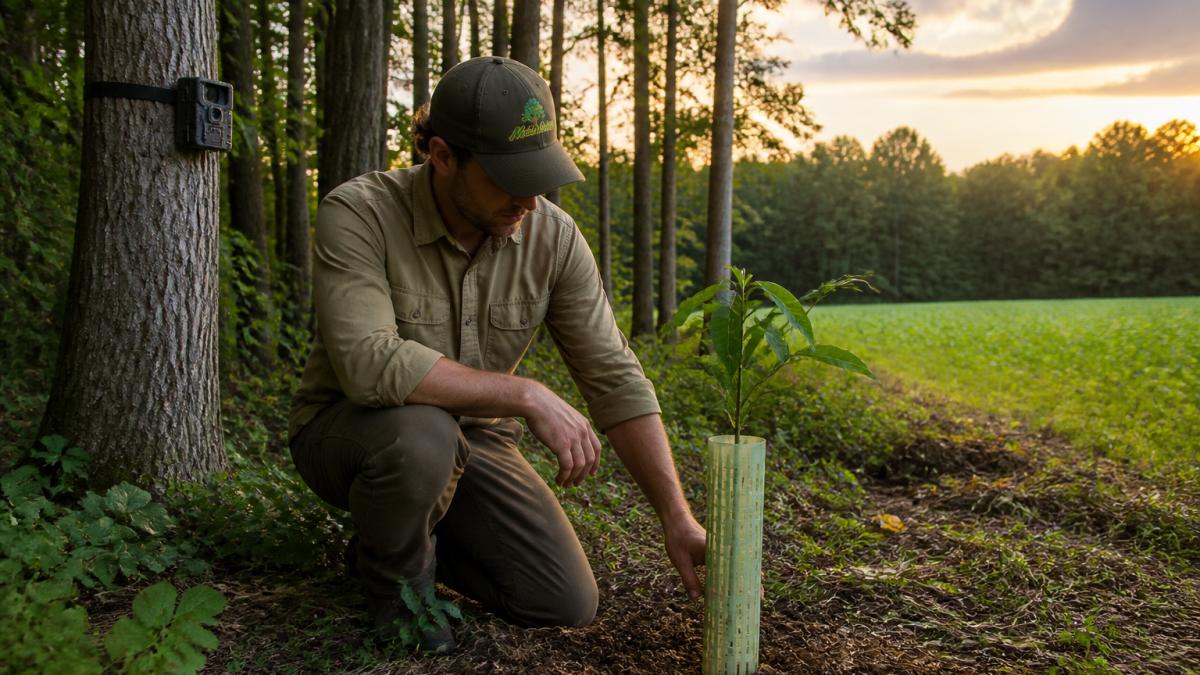
- Tree tubes installed to stop deer browse
- Weed mat down to reduce competition
- Water plan for the first one to two years
Beyond blight, watch for deer browse on young saplings and root damage from poor drainage. Tree tubes handle the first problem; site selection handles the second.
Chestnut trees for deer reward planning more than impulse.
At Morse Nursery, we have spent over 40 years selecting genetics for exactly this work.
Frequently Asked Questions
What chestnut trees are best for deer?
There is no single best chestnut tree for deer. The right pick depends on your climate, soil, property layout, and the hunting window you want to cover. Morse Nursery offers chestnut varieties with different drop windows, including August, September, October and November Drop hybrids. Many landowners plant a mix of early-, mid-, and late-dropping chestnut trees for deer so food stays available across the whole season.
When do chestnut trees drop nuts for deer?
Drop timing varies by variety. August Drop produces nuts in August, September Drop from mid-September to early October, October Drop through early November, and November Drop from mid-November to early December. Gobbler and Morse Hybrid drop September through October, and Chinese Chestnut drops September to October. Combining varieties spreads the food supply from late summer into winter.
How long does it take chestnut trees to produce nuts?
Morse Nursery chestnut varieties typically begin producing nuts within 3 to 5 years under suitable conditions. Full sun, well-drained soil, and steady water during the first year or two support establishment. Trees planted with a qualifying Survival Kit are eligible for a one-year replacement guarantee.
How many chestnut trees should I plant for pollination?
Plant at least 3 compatible chestnuts, and 6 to 10 is better for reliable nut set. Space them 20 to 30 feet apart. Pollination compatibility depends on overlapping bloom periods, not nut-drop dates. Grouping several varieties in one block simplifies this.
Are chestnuts better than acorns for deer?
Chestnuts generally carry lower tannin levels than acorns, which makes them sweeter, and they are rich in carbohydrates. Acorns still matter, especially white oak varieties. Think of chestnuts as a complement to existing oaks rather than a replacement. Chestnut trees for deer also let you choose drop windows, so you can fill gaps when acorns are scarce.