Fruit Trees for Rocky Soil That Actually Thrive

Last Updated: October 26, 2026
Quick Summary
Fruit trees for rocky soil succeed when you match species to site, and chestnuts, pears, and persimmons handle poor, thin sites better than most orchard favorites. Our shortlist includes Chinese chestnut, Kieffer pear, Baldwin pear, Turnbull pear, Seckel pear, persimmon, chinquapin, and hazelnut. Standard-rootstock apples will struggle in rocky soil.
- Most fruit trees need roughly 45 to 60 centimeters of usable soil, and 90 or more is better for long-term vigor.
- Dig the hole two to three times wider than the root ball, and only as deep as the roots sit.
- Build a shallow mound or raised bed if you hit bedrock within 30 centimeters.
- Large surface rocks can stay because they shade the soil, slow evaporation, and hold moisture at the roots.
- Young trees need steady water for the first two growing seasons, plus mulch that holds moisture and blocks weeds.
Table of Contents
- Fruit Trees for Shallow Soil: Species That Handle Thin Ground
- Fruit Tree Rootstocks for Shallow Soil and Stony Sites
- Soil Depth for Fruit Trees: How Much Root Space You Need
- How to Plant Fruit Trees in Rocky Soil Step by Step
- Assessing Rocky Ground Before You Buy a Tree
- Managing Large Rocks, Bedrock, and Bad Spots
- Watering, Mulching, and Getting Trees Established on Thin Ground
- Frequently Asked Questions
Fruit Trees for Shallow Soil: Species That Handle Thin Ground
Fruit trees for rocky soil succeed when you match species to site.
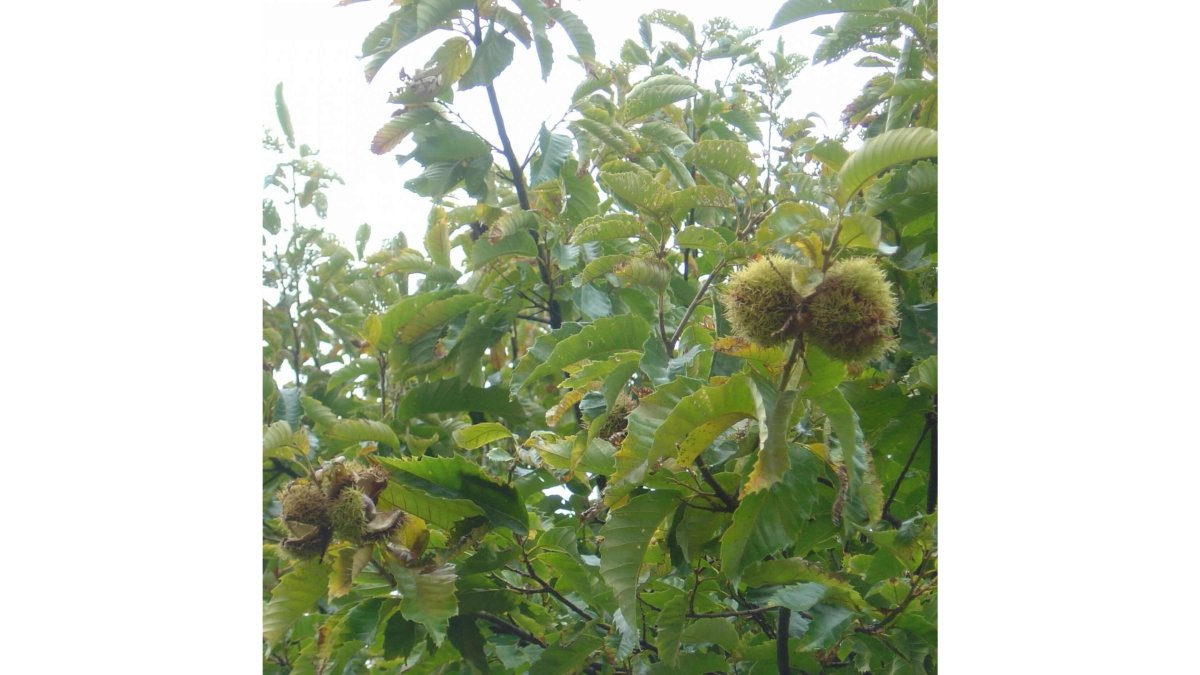
Chestnuts, pears, and persimmons handle poor, thin sites better than most orchard favorites; standard-rootstock apples will struggle.

Our shortlist: Chinese chestnut, Kieffer pear, Baldwin pear, Turnbull pear, Seckel pear, persimmon, chinquapin, and hazelnut.
For thin ground with decent drainage, our Chinese chestnut earns its space; the Kieffer pear tree is the toughest pear we list.

Watch out: planting a standard apple or full-size sweet cherry on eight centimeters of topsoil over rock is the most common mistake we see. No fertilizer fixes a root system that cannot spread.
Fruit Tree Rootstocks for Shallow Soil and Stony Sites
Rootstock choice decides fit more than variety name.
For stony ground, pick a rootstock described as adaptable to poor or variable soils, then control size with pruning.
Best for: stony sites with some soil depth and decent drainage. Skip if: your "soil" is a few centimeters of duff over solid ledge with water pooling everywhere.
For a rough site, the Baldwin pear tree and the Turnbull pear are both worth a look.

Soil Depth for Fruit Trees: How Much Root Space You Need
Most fruit trees need roughly 45 to 60 centimeters of usable soil; 90 or more is better for long-term vigor.
Drainage matters just as much: a shallow pocket that fills with water in spring kills a tree faster than thin soil will.
For tight spaces, a compact, hardy tree beats a large one. Our Seckel pear tree stays manageable and adapts to a range of soils.
Match your measured soil depth to what the tree can realistically do.
Usable soil depth |
What to expect |
Note |
|---|---|---|
45 to 60 centimeters |
Roughly what most fruit trees need |
90 or more is better for long-term vigor |
Under 30 centimeters over rock |
Survival mode |
Size, yield, and drought tolerance all shrink |
Bedrock within 30 centimeters |
Build a raised bed or plant on a mound |
Accept a smaller tree that needs more water |
How to Plant Fruit Trees in Rocky Soil Step by Step
Planting in rocky ground is mostly about width, not depth. Roots spread sideways far more than they go down, so a wide hole beats a narrow deep one.
- Assess the site first. Dig test holes and note depth, drainage, and how much solid rock you hit.
- Clear a wide area. Remove grass and weeds in a circle at least 90 centimeters across.
- Dig the hole two to three times wider than the root ball, and only as deep as the roots sit. A digging bar or soil auger saves hours.
- Keep the graft union above grade. Planting too deep is the fastest way to lose a tree.
- Break up the sides and bottom of the hole so water and roots can move out.
- Backfill with the soil you removed plus organic matter. Do not fill the hole with pure compost.
- Build a shallow mound or raised bed if you hit bedrock within 30 centimeters.
- Water deeply, then mulch with a weed mat or coarse mulch kept clear of the trunk.
- Stake only if needed and protect the trunk with a tree tube against browse.
Assessing Rocky Ground Before You Buy a Tree
A ten-minute site check saves a wasted season. Walk the ground with a shovel and probe, noting soil depth, where water stands after rain, slope direction, and sun exposure.
Drainage is the deal-breaker.
Slope and aspect change everything on a rocky hillside.
Hardiness zone sets your outer limit. Most trees we recommend sit in zones 3 through 8, but check the specific listing before you order.
Managing Large Rocks, Bedrock, and Bad Spots
Sometimes the right answer is to work around the rock.
Large surface rocks can stay: they shade the soil, slow evaporation, and hold moisture at the roots. Work planting pockets between them rather than hauling them out.
Where the ground is genuinely hopeless, plant something else. A shrub like hazelnut or a tough native will do more for the site than a struggling fruit tree.
Watering, Mulching, and Getting Trees Established on Thin Ground
Establishment is where rocky-soil plantings are won or lost. Shallow ground dries fast, so young trees need steady water for the first two growing seasons, plus mulch that holds moisture and blocks weeds.
- Water deeply and less often rather than a light daily sprinkle
- Mulch out to the drip line, a few centimeters off the trunk, and refresh each spring
- Prune lightly in the first years to shape the tree without stunting it
Once established on a decent rocky site, a tree often needs less care than one on rich ground, because deep roots and good drainage do the work. The first two years decide it.
Frequently Asked Questions
Can fruit trees grow in shallow, rocky soil?
Yes, but the tree has to match the site. On rocky soil the limiting factor is usually soil depth and drainage rather than fertility. Aim for at least 18 to 24 inches of workable soil over bedrock or a hardpan. Species such as pears, persimmons, and chestnuts handle thin, well-drained ground better than most apples. Where bedrock sits closer than 12 inches, plant on a raised mound or choose a dwarf tree in a large container instead of fighting the site.
How do you plant a fruit tree in rocky ground?
Dig a hole two to three times the width of the root spread but only as deep as the root system, so the graft union stays above grade. Use a soil auger or mattock to break through stony layers, and keep the topsoil separate from the rock you pull out. Backfill with the original soil plus a modest amount of organic matter, firm it in stages, and water deeply to settle air pockets. Mulch 3 to 4 inches deep, keeping it off the trunk.
Should you remove rocks before planting a fruit tree?
Remove the large rocks inside the planting hole, since they create air pockets and block root growth, but leave smaller stones in the surrounding soil. A share of gravel improves drainage on clay-heavy ground, and hauling out every rock damages the soil structure you need. If a solid shelf of bedrock or a layer of hardpan sits under the hole, break it up or plant on a mound so water can drain away rather than pooling around the roots.
Rocky ground is not a reason to skip planting, but it is a reason to choose carefully and dig wide. If you are unsure which species fits your site, our team will help you plan it out, and every tree we ship comes with the genetics and root development to give it a real chance. Get started with Morse Nursery and turn thin, stony ground into a productive planting.