7 Reasons Chestnut Trees Resist Blight

Last Updated: October 27, 2026
Quick Summary
Chestnut blight resistance comes from Chinese and Japanese chestnuts that co-evolved with the fungus, limiting fungal growth at the infection site. Resistance is not immunity: these trees still get infected, but their defense confines the canker to a small area that heals over.
- Chestnut blight enters bark wounds and forms cankers that girdle the stem.
- Chinese and Japanese chestnuts co-evolved with the blight fungus, limiting fungal growth.
- Resistant chestnuts still get infected but confine cankers to a small area.
- American chestnuts are highly susceptible and die back to the root system.
- Plant resistant stock, protect young trunks, and keep trees vigorous to reduce orchard loss.
Table of Contents
- How Chestnut Blight Kills Susceptible Trees
- Why Chinese and Japanese Chestnuts Resist the Fungus
- American vs Chinese Chestnut Identification
- What Resistance Actually Means in Practice
- How Chestnut Blight Spreads and Why It Matters for Planting
- What Most Guides Get Wrong About Chestnut Blight Resistance
- Frequently Asked Questions
How Chestnut Blight Kills Susceptible Trees
Chestnut blight (Cryphonectria parasitica) enters bark wounds and forms sunken cankers that expand until they girdle the stem, which is why chestnut blight resistance matters so much.
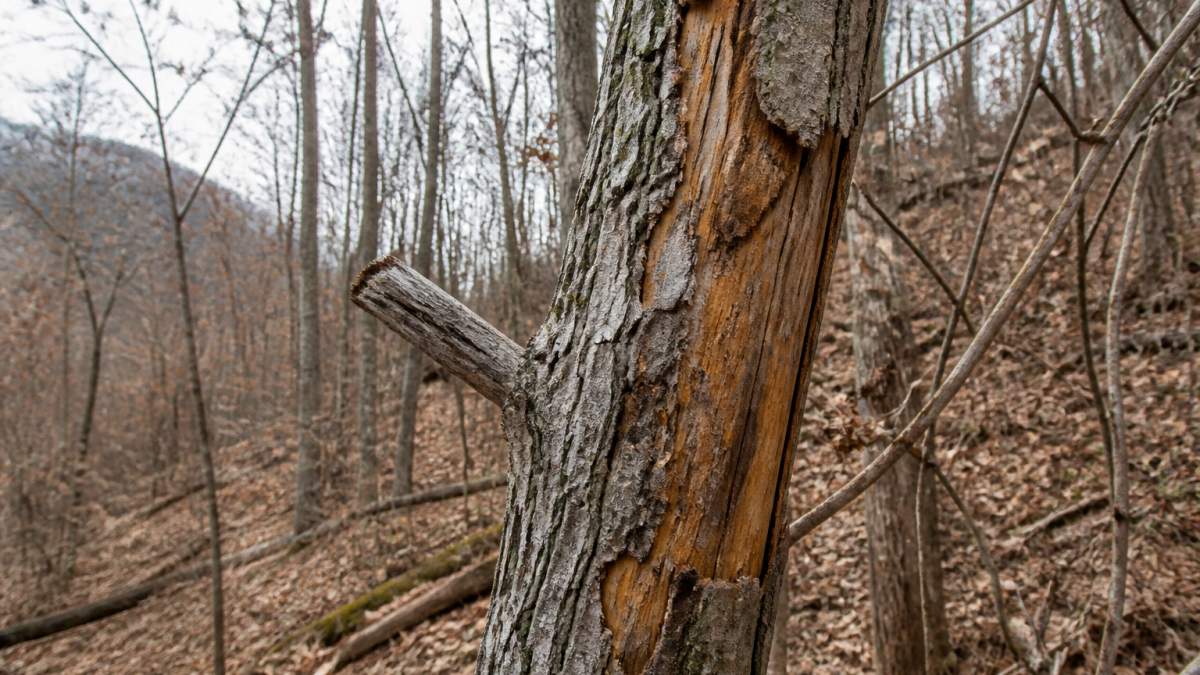
Wind-borne spores spread through the cambium, disrupting water and nutrient flow; once a canker encircles the stem, everything above dies, but roots survive and send up sprouts the fungus kills back.
Why Chinese and Japanese Chestnuts Resist the Fungus
Chinese and Japanese chestnuts resist blight because Castanea mollissima and Castanea crenata co-evolved with Cryphonectria parasitica, limiting fungal growth at the infection site. Resistance is not immunity: these species still get infected, but their defense confines the canker to a small area that heals over.
USDA Forest Service research on chestnut blight and species resistance
Our Chinese Chestnut is a blight-resistant species that produces sweet, edible nuts in as little as 3 to 6 years.

American vs Chinese Chestnut Identification
American chestnut leaves are long, narrow, and sharply toothed; Chinese leaves are broader, oval, and glossier. American nuts are small and sweet; Chinese nuts are larger.
| Feature | American Chestnut | Chinese Chestnut |
|---|---|---|
| Leaf shape | Long, narrow, sharply toothed | Broad, oval, glossy |
| Nut size | Small | Large |
| Blight response | Highly susceptible | Resistant, not immune |
Most chestnut-looking trees are hybrids or Chinese chestnuts; leaf and nut differences are the fastest way to tell them apart. Compare Chestnut Bundles for planting a blight-resistant orchard. Browse the full Chestnut Trees collection to choose one to plant.
What Resistance Actually Means in Practice
A blight-resistant chestnut can still develop small cankers but does not die from them, producing nuts for decades, while susceptible American chestnuts die back to the root system. Hybrids of American and Chinese parents can carry good blight tolerance with faster growth, but tolerance varies by cross and site. The Morse Hybrid Chestnut is a fast-growing hybrid of American and Chinese chestnut, and the Gobbler Chestnut produces smaller nuts.
American Chestnut Foundation backcross breeding program overview
How Chestnut Blight Spreads and Why It Matters for Planting
Blight spreads through wind-borne spores and can move on infected wood, tools, and bark wounds. Planting resistant trees reduces the odds of losing an orchard to a single infection, but does not remove the fungus from the landscape. Site and tree health matter as much as genetics: plant resistant stock, protect young trunks from damage, and keep trees vigorous. Our article on how many chestnut trees it takes to feed one buck walks through the math so you can size a planting to your property. Vigilance remains the final line of defense against fungal encroachment, requiring owners to monitor their groves closely for early signs of tree disease.
Penn State Extension guide to chestnut blight disease management
What Most Guides Get Wrong About Chestnut Blight Resistance
The biggest error is treating "blight resistant" as a synonym for "immune." The second is assuming all resistant chestnuts are equivalent: Chinese, Japanese, and hybrid chestnuts differ in infection containment, growth, and production. A third mistake is overlooking root sprouts: American chestnuts resprout from surviving roots, but the fungus kills them back. Restoration focuses on transferring blight-resistant genes into American-type trees through backcross breeding and hybridization.
U.S. Forest Service research on American chestnut restoration
Genetics decide the outcome long before you plant. Morse Nursery has over 40 years of forestry and wildlife habitat expertise and specializes in genetically selected, air-pruned trees. Free planting consultations are available, and a one-year tree survival guarantee is available with qualifying Survival Kit purchases. Get started with Morse Nursery and plant chestnut trees for wildlife habitat.
Frequently Asked Questions
How is chestnut blight transmitted?
The Cryphonectria parasitica fungus spreads through airborne spores released from orange cankers on infected bark. Wind carries spores to wounds, cracks, and fresh bark on nearby trees. Rain splash and birds can move spores short distances, and moving infected wood or nursery stock spreads the fungus farther. Because American chestnut bark offers little resistance, a single infection can girdle a stem within a few years. Resistant species like Chinese chestnut limit canker growth, slowing the spread.
What is the difference between American and Chinese chestnut blight resistance?
American chestnuts have almost no defense against Cryphonectria parasitica, so cankers spread through the bark and kill the stem. Chinese chestnuts evolved alongside the fungus and form a protective barrier that contains cankers, giving them chestnut blight resistance that keeps trees alive for decades. The difference is genetic, not a matter of luck or site conditions. Hybrids bred from both species inherit partial resistance, which is why backcross breeding programs matter for restoration.
How do I identify signs of chestnut blight in my orchard?
Look for orange-brown cankers on trunks and branches, cracked or sunken bark, and wilted or browning leaves on upper limbs. Cankers often appear where bark was wounded. On American chestnuts, stems may die back and send up root sprouts that later reinfect. Chinese chestnuts usually show only minor lesions. If you spot cankers, prune affected limbs in dry weather and dispose of the wood away from healthy trees.